
The best medical electronic records software in Gujarat is the one that matches your size. A clinic needs fast, simple paperless records. A hospital needs ward, lab and billing records in one place. An inpatient-heavy hospital needs documentation that nurses will actually fill in. Of the five options below, PurpleIPD suits hospitals with inpatient wards, Adrine and MocDoc suit hospitals that want a wider management system, Doxxy suits clinics, and Samarpan Infotech suits groups that want a custom build.
Choosing is hard because vendors use EMR, EHR and HMS almost interchangeably. An EMR holds one provider’s records, an EHR is meant to share them across providers, and a hospital management system bundles records with admissions and billing. This list covers private options. Government hospitals work through the state’s GHMIS.
Each pick below gets the same two checks: what it covers, and who it suits along with what to ask before you sign. PurpleIPD is our own product, so we say plainly where it fits and where it does not.
1. PurpleIPD for paperless inpatient records
PurpleIPD is paperless inpatient (IPD) documentation from PurpleBits Infosystems, a Vadodara company. It is not a full EMR or HIS. It sits beside your existing system and replaces paper case sheets and registers with tablet forms.
What it covers
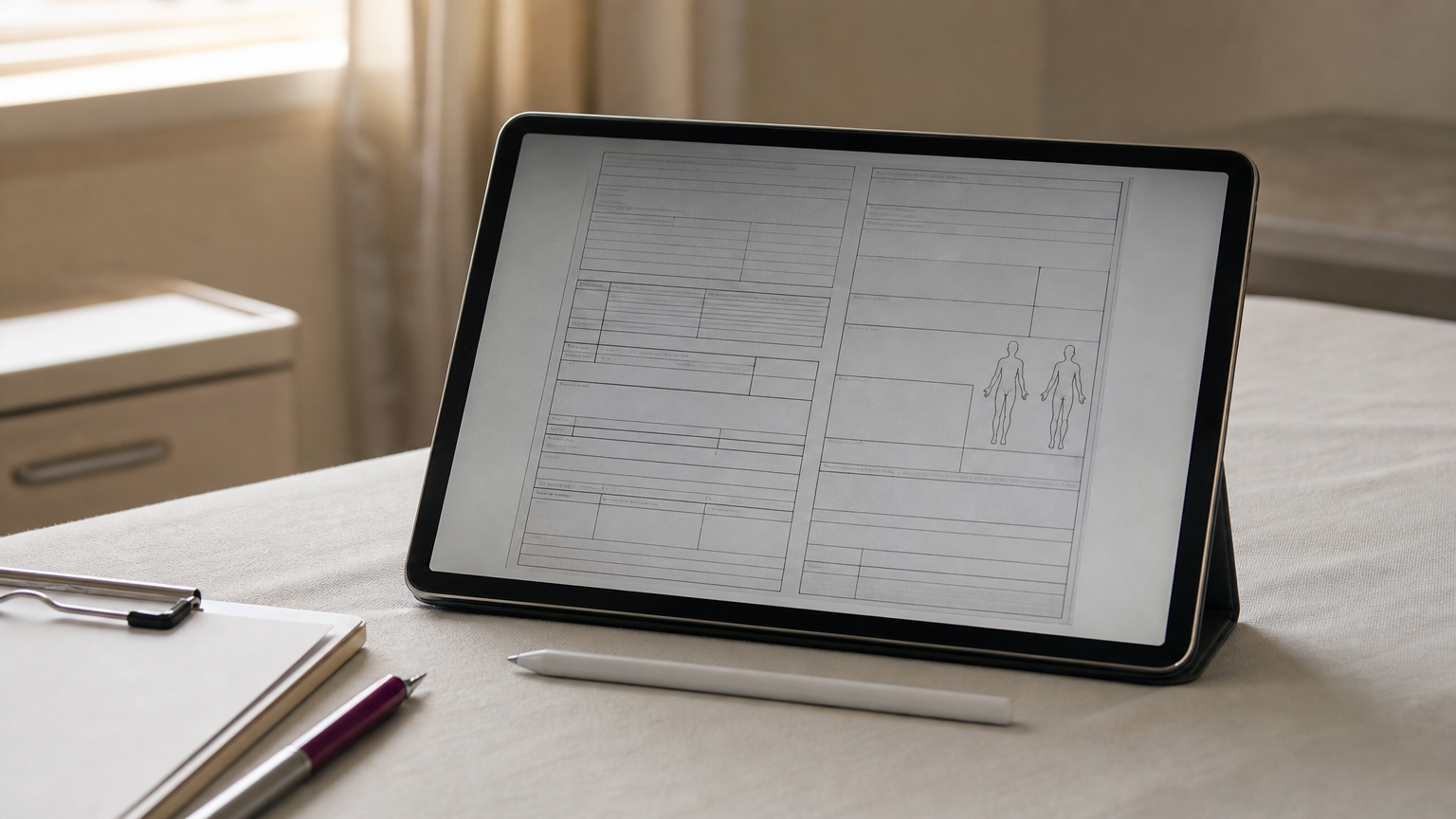
Staff write with a stylus on your hospital’s own forms, either scanned or rebuilt in the form builder. Data is entered during the round, not after, and several departments can work on the same record at once. It runs on Android tablets (Samsung or Lenovo with stylus) over the hospital LAN, with no internet dependency.
- Audit trail of every change, login and access
- Video consent recording, including PM-JAY consent
- Flags for missing forms before discharge
- Lab report management and AI-generated discharge summaries
- Connections to ABDM and HCX, plus your existing HIMS, lab and billing systems
Who it suits and what to ask
It suits private and mid-sized hospitals with inpatient wards that already have a HIS and want NABH and ABDM readiness. VIMS Hospital cut discharge time by 1.5 hours with it. Data stays on your own infrastructure, with encryption, role-based access and cloud backup.
Rollout typically takes 6–8 weeks, and the vendor configures your existing paper forms. Pricing depends on the number of tablets or beds, quoted on request. Ask how many of your forms are converted at launch. Skip it if you run a single-doctor clinic, because you do not need an IPD layer.
PurpleIPD does not replace your hospital system. It digitizes the ward paperwork that the system never covered.
2. Adrine for full hospital management
Adrine is a hospital management system marketed with a strong Ahmedabad focus. If you want one vendor for the whole hospital, it belongs on your shortlist.
What it covers
Adrine presents itself as an AI-powered HMS. In an HMS, the electronic record is one module among admissions, billing and other departments, so you buy the record and the surrounding workflow together.
- AI-powered hospital management system
- NABH compliant
- GSHC integration
- Free demo offered
Who it suits and what to ask
Hospitals in and around Ahmedabad that want a single system, rather than a record tool added to an existing HIS, are the natural buyers. Because it is a wide platform, the demo matters more than the brochure.
Ask the vendor to show a ward round note, a discharge summary and an NABH audit report on screen. Ask whether inpatient forms follow your layout or a fixed template, and get a written quote.
A full HMS gives you one system, but you must test whether its inpatient notes match how your doctors actually write.
3. MocDoc for cloud hospital and lab records
MocDoc is a cloud-based hospital and lab management system with a Gujarat page. It stores records online instead of on your own server.
What it covers
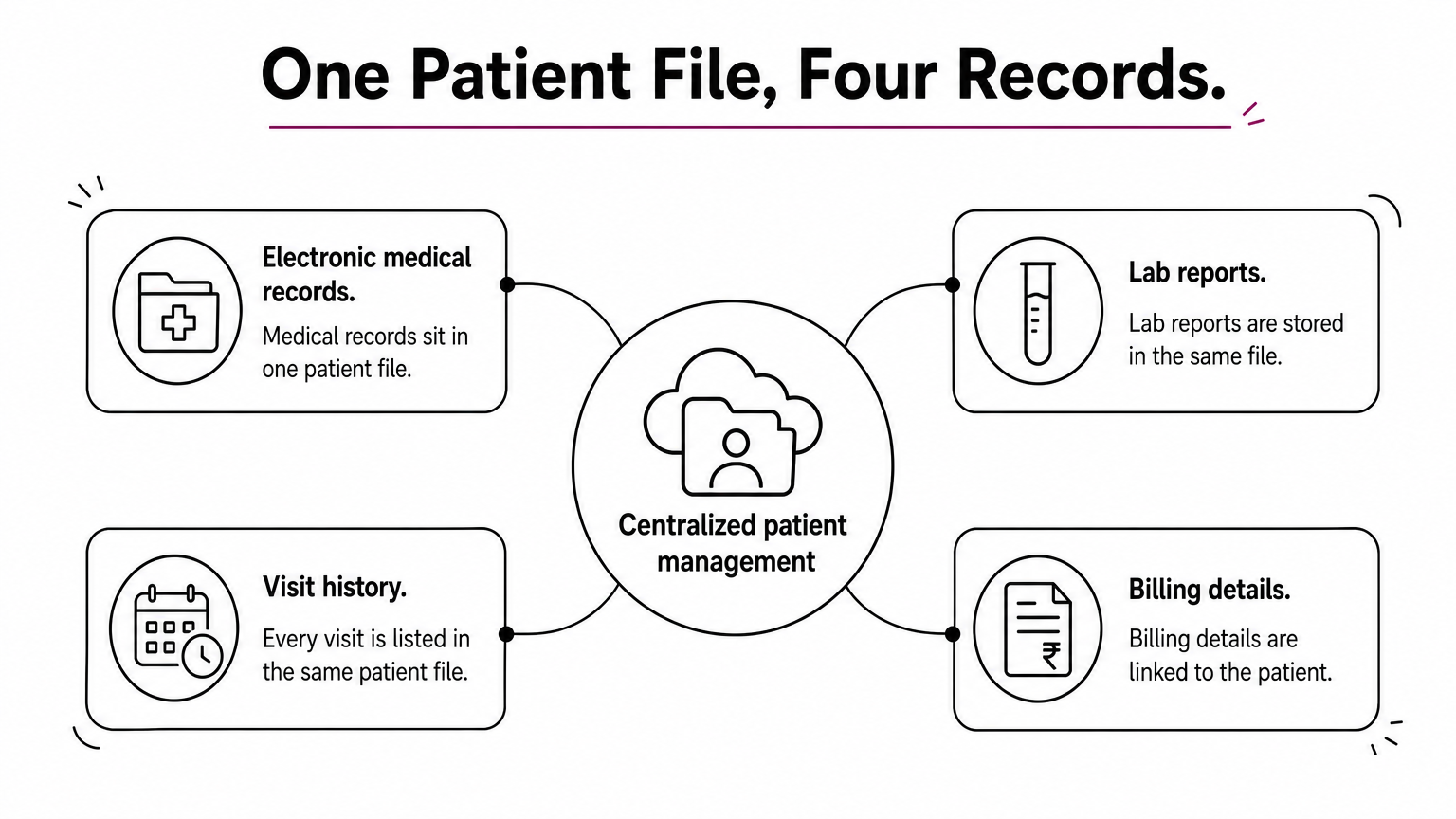
The core idea is centralized patient management. Electronic medical records, lab reports, visit history and billing details sit in one patient file that any authorized department can open.
- Cloud-based, no server of your own to maintain
- Electronic medical records and visit history
- Lab reports in the same file
- Billing details linked to the patient
Who it suits and what to ask
It suits hospitals with an in-house lab, and groups with more than one site, that want every location on one platform. Cloud hosting also suits you if you lack IT staff to look after a server.
Ask where the data is hosted and how it is protected under India’s DPDP rules. Ask what happens to ward work during an internet outage, and whether you can export all records if you leave.
With a cloud system, your first question is not features but where your patient data physically sits.
4. Doxxy for small clinics
Doxxy is a clinic software for practices in Ahmedabad that want to stop writing on paper. It is built for clinics, not hospitals, and that is its strength.

What it covers
It covers the daily clinic loop: records, reminders and billing. Paperless records replace the file cabinet, while patients get WhatsApp reminders and pay by UPI.
- Paperless patient records
- WhatsApp reminders
- UPI billing
- ABDM compliance
Who it suits and what to ask
Single-doctor practices and small clinics with a front desk fit best. You get working records quickly without the complexity of a hospital system.
Ask whether it can grow with you if you add beds, because a clinic tool rarely handles inpatient charts. Also check how ABHA linking works in daily use, and whether you can export your records.
If you see fewer than a few dozen patients a day, a clinic tool beats a hospital system every time.
5. Samarpan Infotech for custom EHR builds
Samarpan Infotech is a software company that builds AI-powered EHR and EMR solutions. You are commissioning software, not buying a ready product.
What it covers
Its offer centers on clinical workflows, patient data access and care coordination. The appeal is that the software follows your process, rather than the other way round.
- Custom EHR and EMR development
- Focus on clinical workflows
- Better patient data access
- Care coordination across teams
Who it suits and what to ask
It suits hospital groups and specialty centers whose workflows no ready product fits. Expect a longer timeline than a packaged system, because you define requirements first.
Ask who owns the source code, what ongoing support costs, and how NABH and ABDM requirements are built in. Insist on a fixed scope and milestone payments.
Custom software buys you fit, but you pay for it with time and a long-term dependence on one developer.
Picking the right system for your facility
Match the tool to your size. Clinics should look at a clinic product, hospitals with a HIS and paper wards need an inpatient documentation layer, and groups with unusual needs can consider a custom build.
Shortlist two vendors. Run each demo with your own forms, and check three things every time: an audit trail, ABDM readiness and where your data is stored.
If your hospital has inpatient wards and still runs on paper files, see how PurpleIPD works and book a demo.
